
Skip to content

Lisa

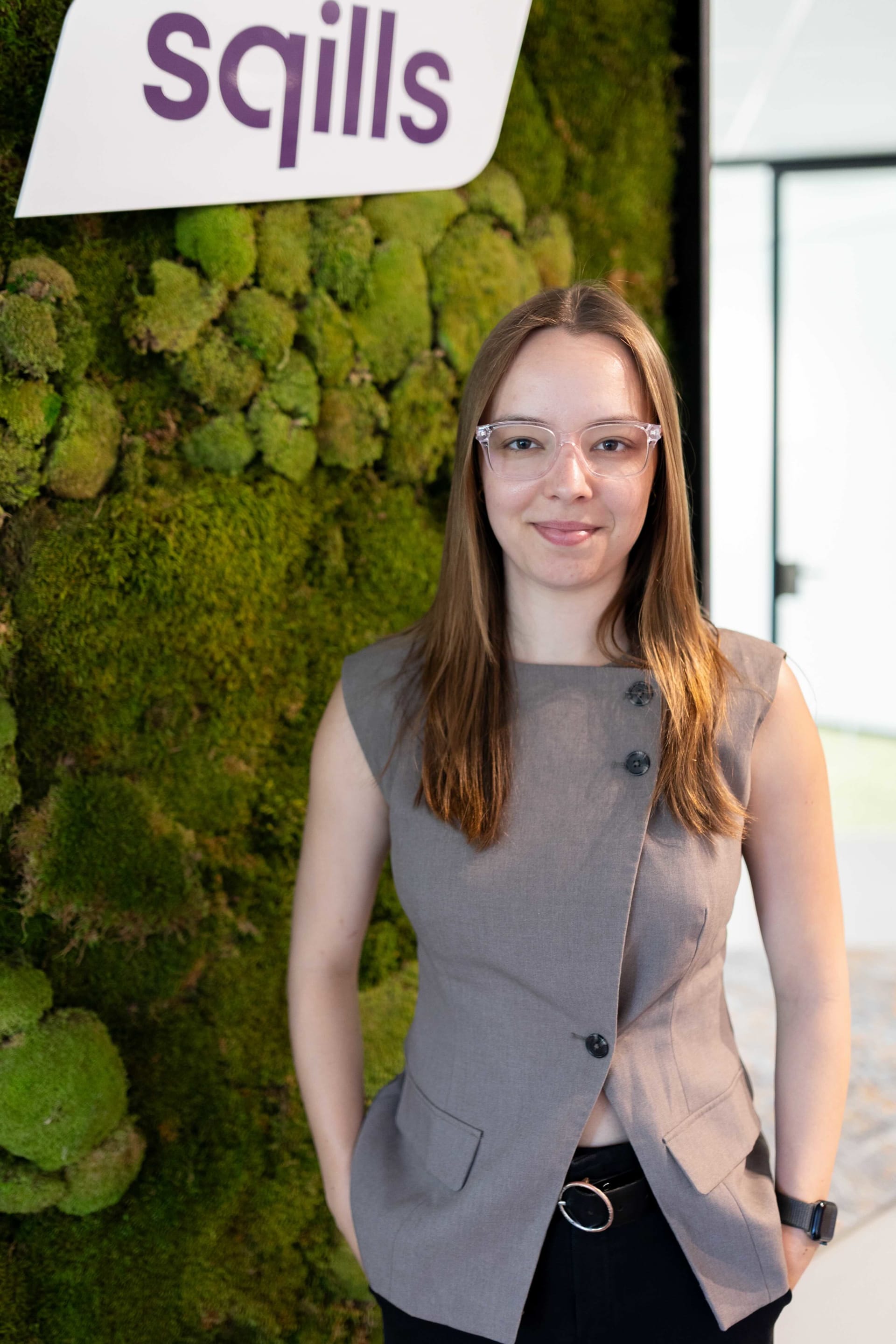
Lisa talks about her unconventional recruitment, a difficult first year, and finding her groove with one of the most agile teams at Sqills. As a software engineer in a team that primarily focuses on internal tooling, she has an almost unique look at working at Sqills.

How did you end up at Sqills?

I'd just finished my studies and was ready for a job, so I started applying everywhere, including all the old sponsors of Syntaxis, my study association. Sqills was one of the former sponsors.

I had a few interviews lined up, and Sqills was already my preference because it was a full-stack position. But the funny part is I also got recruited in the pub. I worked at a local beer pub and one of my current team members was a regular there. I'd already chatted with them a few times about where they worked. Then one evening, while I was behind the bar, my future colleague launched into a whole speech about how amazing Sqills is and how I had to come work there. That definitely sold me.

What does a typical week look like?

Our team is a bit unique within Sqills, so my week looks different from most. Either I'm already deep into something - a bigger issue I'm working through - or I go to my Product Owner and ask, "Have you got anything interesting for me?" Different people on the team have ownership over different things, so my teammates can also ‘sell me’ an issue to pick up.

I have a lot of freedom to decide what I work on. That means I can pick things I find genuinely interesting and things that have real impact across the company. If a colleague comes to us with a problem, I can decide on the spot to dig into it. This means you notice the impact you have really quickly.

We do a stand-up every afternoon. It's usually a full half hour. Having it in the afternoon is actually really nice, we've already been working all morning, so we're actually in the groove and can talk through problems clearly. Then we use the rest of the day to act on whatever comes up.

I also work on personal goals. I find it helpful to have something structured to aim for, so I review them every two or three weeks. Last year I took dedicated work time to read programming books and complete an AWS training. Setting structured time in the week for that kind of growth makes it actually happen.

You're on a relatively unusual team - your "customers" are internal. What are the upsides and downsides?

Mostly upsides. The biggest is direct impact…we can move really fast. We are probably one of the most agile teams within Sqills. If something I'm working on turns out to be lower-priority than a new issue, I can switch immediately. We do not have many hard deadlines. We have a lot of freedom to bring in new technologies and we can act on that quickly. We are a team that can afford to experiment quite a bit.

The downside is that we end up knowing less about the rest of the product. Our colleagues are our customers, so we have plenty of contact with them, but we don't know S3 Passenger as deeply as other teams do. In theory that would make it harder to take someone from our team and put them in one of the other development teams.

"I could come to him with the dumbest questions or just ask for help, and he wouldn't do the work for me, he'd help me work through it."

What surprised you about working here?

Honestly? My first year was rough.

It was a tough one. The team didn't have a lot of presence at the time, and I struggled with that. I also put a huge amount of pressure on myself, I expect a lot from myself. The funny part is that once I had actually decided to leave, and that's when things started to get better. Not because of the team, because of me. Once I'd made the decision, I stopped putting so much pressure on myself, and everything eased up.

My team was really understanding throughout, which mattered a lot. Outside my immediate team, I don't think anyone really knew what was going on. What turned things around was a senior developer joining the team. He was incredibly approachable and genuinely wanted to teach. I could come to him with the dumbest questions or just ask for help, and he wouldn't do the work for me, he'd help me work through it. Having a mentor like that on the team made an enormous difference.

"'The learning opportunities here aren't just handed to you. You can go and seek them out yourself"

What keeps you here now?

The learning opportunities. Once I found my groove, I realised how many chances there were to grow - both inside the team and outside it. I had another senior developer as a mentor through the mentorship programme, which was great. I also remember a social chat early on with one of our more experienced consultants. He knew straight away that I was struggling and was really kind about it. Small things like that added up.

And - practically - I got a pay rise, which I needed. Means I can actually find a place to live.

But mostly it's that the learning opportunities here aren't just handed to you. You can go and sek them out yourself. That suits me.

Do you want to move teams or change roles eventually?

Not right now. I'm in a good spot and there's plenty here for me to grow into. If something interesting came up outside the team I'd consider it, but I'm not actively looking to make that change.

Longer term, a Team Coach role appeals to me, I've got a lot of affinity for the people side from my time on the board of my study association. But for now I want to stay focused on the technical side and less on the personal-development side of things. That can come later..

What should someone know before applying?

Sqills can be pretty chill - if you let it be chill.

There's a lot of freedom here, even outside your own team. Nobody's going to be hovering over you as long as you do your job properly. The atmosphere is not strict. But you do have to give yourself permision to take that freedom.

That's partly my own perspective, because I learned the hard way that if you set the bar impossibly high for yourself, freedom offered by the company doesn't help you. You'll just keep grinding because you think you have to. You can let go of some of that. In my experience, letting go a bit actually makes the next day's work better.