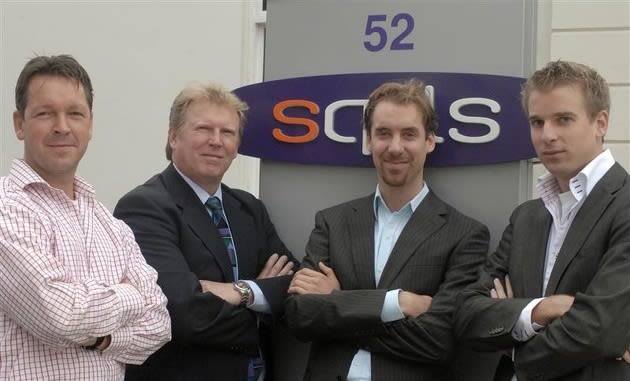
When the four founders started working together, they had a very clear idea of what Sqills should not be.
In the mid-2000s, most IT companies made their money selling hours. That model came with two problems they wanted no part of. First, it made the company dependent on business cycles. If the market slowed down, people had no work. Second, it tied the company to building bespoke software to whatever a customer happened to want, project by project. The founders saw a dead end. One that could scale without having to double headcount every time revenue grew.
So around 2007 - when most of the Dutch IT industry was still happily billing by the hour - Sqills went a different direction. They would build a standard product, not custom solutions. They would charge based on usage, so that when a customer did well, Sqills did well. And they would focus on long-term partnerships with fixed pricing, rather than chasing short-term contracts.
It was an unconventional bet at the time. SaaS was barely a word people used, and pay-per-use models in enterprise software were rare. But it meant Sqills was building something that could compound, a product that got better with every customer, not a service that reset to zero with every new project.