
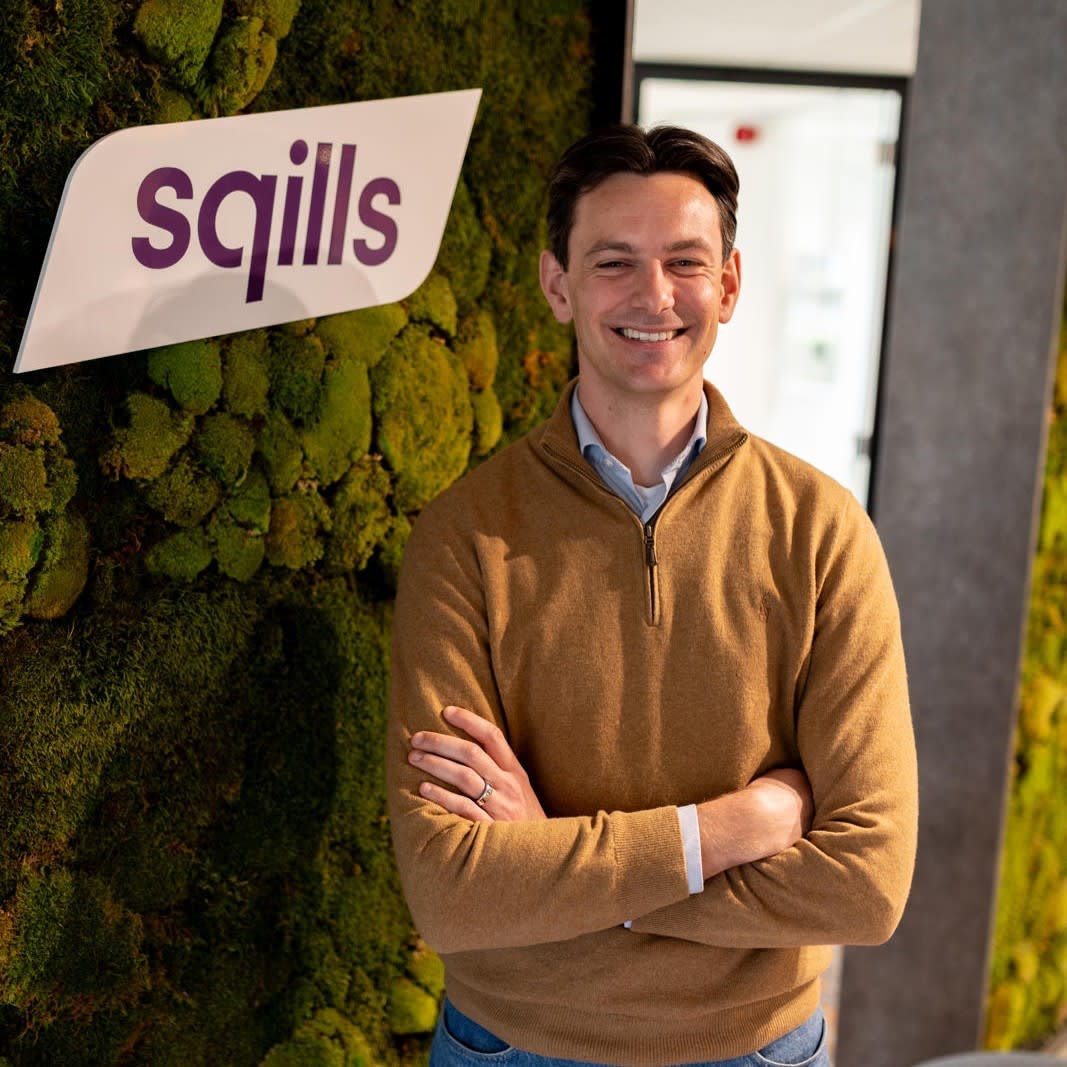
Gijs has been at Sqills for several years as a Business Consultant. He found Sqills entirely by accident, through a newspaper headline about an acquisition. He stays for the autonomy, the tangible impact, and the chance to represent a quietly impressive company most people in the east of the Netherlands have never heard of.
Gijs
Meet Gijs - From "Never heard of Sqills" to experienced Business Consultant, three years on from the newspaper headline that introduced him to the company.
How did you end up at Sqills?
Honestly, by chance. I was finishing my studies, focused on international management and consultancy, doing an internship at a management consultancy firm. I knew I wanted to go into consultancy, but I also didn't want to leave the east of the Netherlands. However, the area is not exactly a hotspot for big consultancy firms.
One morning I opened the local newspaper Tubantia and saw the headline: ‘Sqills acquired by Siemens Mobility for €550 million’. I'd never heard of Sqills before. But it is based in Enschede. How did I not know about this? I started googling out of pure curiosity and found they had a business consultant traineeship open. Big local company, consultancy track - that was enough. I applied, got selected, and that is where it began.
If that acquisition hadn't happened, I don't think I would have ever found Sqills. I wasn't looking for an IT job at all. I was after the consultancy side of things. But I rolled into it, and here I am.
Was management consultancy always the end goal?
At the time, I thought it would be. What I've actually figured out is that I just really enjoy helping people. As a management consultant you do that by advising companies on strategy or transformation. Here, we do it by helping our clients implement our product and advising them on how to get the most out of it. The essence is the same, helping people, getting their feedback, helping them get unstuck.
The difference is that management consultancy is a bit more ambiguous. You're talking about things where everyone can have their own valid view and there's no single truth. IT is much clearer: it either works or it doesn't. You can still have plenty of discussion, but the facts are what they are. That actually makes it more fun, not less.
What does a typical week look like?
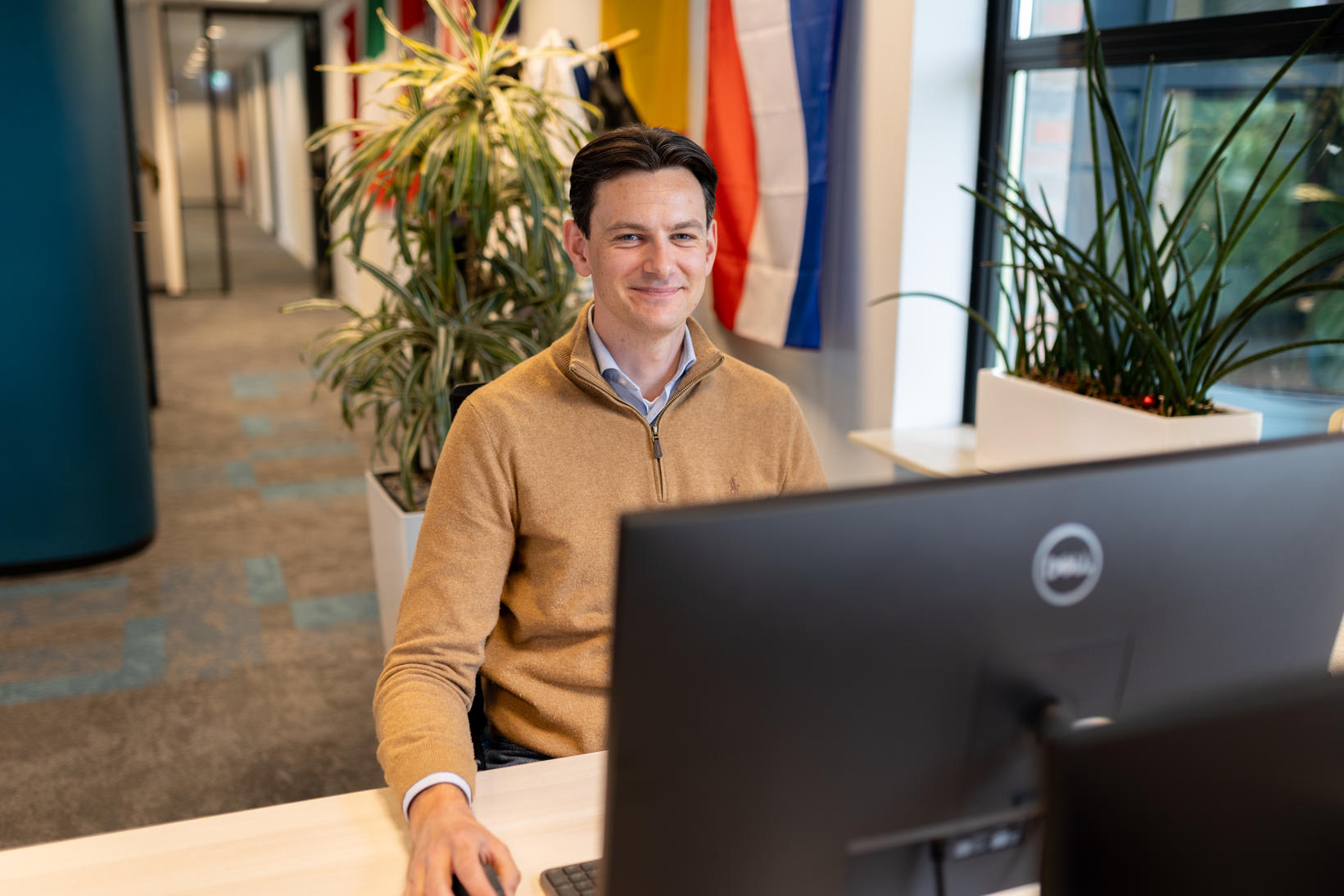
It depends a bit on what I’m working on at the time and what the priority is that week. The work comes down to guiding clients through specific parts of implementing our product. Early on, that might mean sitting at the start of a project and walking a client through what S3 Passenger can do and how their wishes line up with that. Further along, it's building features against detailed client requirements - or explaining how they can implement something we already cover. And then there's project management: making sure what we deliver matches the client's planning.
There's also a big internal side. Internal projects, knowledge sharing, bringing newer colleagues up to speed on things you've built expertise in. A typical week has client meetings, Jira analyses, lots of calls, and plenty of internal brainstorming to get to the core of what a requirement actually is.
One thing that always makes me smile: a lot of client requirements exist because of the limits of their old system. They'll say "we want X in S3 Passenger" because the old system did it that way. But three layers down, they actually want something completely different - something their old system couldn't do.
So it's a lot of asking why. The cliché of the 5 Whys method is a cliché for a reason. And the person you are talking to often does not know exactly what the underlying reason is either, so you dig through the organisation until you find what they're really trying to achieve. Then you can properly think along with them.
"As a consultant at Sqills you get a lot of responsibility, which also means a lot of freedom to decide what your week should look like."
How do you handle priorities?
As a consultant at Sqills you get a lot of responsibility, which also means a lot of freedom to decide what your week should look like. You'll talk things through with colleagues on a project, but ultimately it's on you to manage your time effectively.
So you need a clear picture of the playing field: all your stakeholders, all the dependencies, who's waiting on what. You build your own priority list from there. Client X is waiting on my analysis, so that goes to the top - it is not "what do I feel like doing today".
Internally, the planning and priorities of your clients are not always visible to others. I sometimes say, half joking, that internally you represent the client's interests, and at the client you represent Sqills'. So you do have to be proactive. Sometimes that means just grabbing people and saying: tomorrow morning, 9 am, we're talking about this.
What surprised you about working at Sqills?
A few things.
First, how invested everyone is. In previous jobs and internships, people had their own little fiefdoms and didn't really care how their work connected to the bigger picture. Here, everyone is genuinely pulling in the same direction - what's best for the product, the company, the clients. People are willing to go the extra mile because of it. That surprised me.
The flat structure surprised me too, especially for a company this size - and a company that is a part of Siemens. Everyone is open and honest with each other. Very Dutch, probably a bit Twents as well. Your title, your role, whether you have been here a month or twenty years - it doesn't really factor into how you are approached. I didn't expect that.
"I'll spend a day in Belgium talking about how to improve the physical ticket machines at the station using our product. Five minutes after the meeting, I walk into that same station and see hundreds of people using those machines."
What keeps you at Sqills?
There are plenty of companies in the east of the country, so location alone is not the reason to stay. What keeps me here is how my own ambitions get translated into actual opportunities. If you are open about where you want to grow, people genuinely think along - realistically, of course, but you're not boxed in.
Then there's the travel. I spend a lot of time with clients, and the work is incredibly tangible. I'll spend a day in Belgium talking about how to improve the physical ticket machines at the station using our product. Five minutes after the meeting, I walk into that same station and see hundreds of people using those machines. Your work is immediately real. That's genuinely satisfying - you feel like you're adding something.
And lastly, the colleagues. Some of mine have become real friends - people I see outside work - while we still keep it professional when it matters. That combination is something I think is fairly unique here.
Would you prefer clients closer to home or further away?
I've worked with Belgian clients for three years now, with the odd trip elsewhere. Which I like. Belgium's close to us culturally and linguistically, and it still gives me plenty of room to grow. But I'd love to spend a couple of weeks somewhere genuinely different at some point. Cultural and organisational differences between countries were a big focus during my studies. Representing Sqills somewhere far away… that is definitely on my list.
"We are not a consumer-facing name, but we are often the engine behind our clients' business - your daily work has a direct impact on millions of travellers, every single day."
What would you tell someone thinking of applying?
Two things.
One: you can actually be yourself here. People walk in expecting to have to adjust - and after a few months you watch them thaw and realise, wait, everyone around me is just themselves. Nobody's putting on a performance. Of course everyone's self-critical and wants to grow, but you don't have to put on a costume. That's worth knowing before you apply. You can be open about your ambitions and your goals and it won't feel awkward.
Two: we're modest Tukkers (a nickname given to people from Twente). Quietly working on something that's actually impressive. I talk to a lot of people from the eastern part of the country and most of them have no idea what's tucked away on the Kennispark.
Our product is not listed on our clients' websites. We are not a consumer-facing name, but we are often the engine behind their business. Whatever your role might be at Sqills - developer, consultant, anything, your daily work has a direct impact on millions of travellers, every single day, all over the world. You don't quite grasp that on day one. But it's what makes the work feel worth doing.
Want more?
Want to apply to start creating your own story at Sqills? Want to read more from other colleagues? Click below