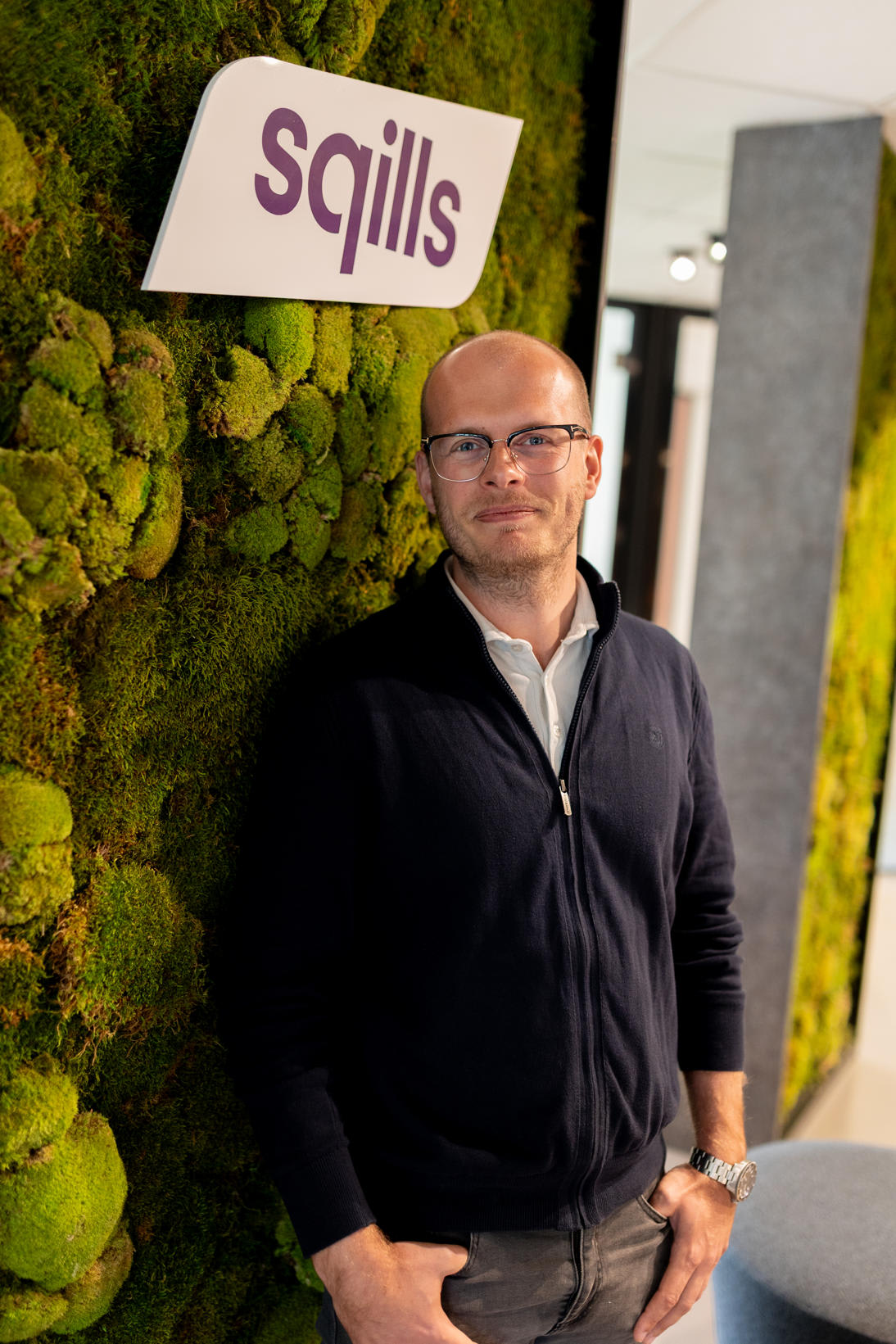
Max has been at Sqills for 11 years. He started as a trainee software tester, became a Team Coach, and now works on improvement projects and compliance as Improvement & Compliance Specialist. His journey is anything but linear, and that's kind of the point.
Max
From "Wait, This Isn't About ISO" to Improvement & Compliance Specialist. Eleven years, several roles, and a long way round to the job he thought he applied for.
How did you end up at Sqills?
About 11 years ago I was finishing my Industrial Engineering & Management degree and needed a job. Sqills had an opening for a Quality Assurance Engineer, and I figured, quality assurance, that's ISO 9001 stuff, that's what I studied. So I applied.
Turns out it was software testing. Completely different thing. But during the interview I got talking about my actual interests, working with computers, getting into IT. I was running Linux at home, which apparently was enough to convince the tester in the room that I was some kind of nerd. That helped.
They weren't fully sold on my motivation though, so they invited me to spend a full day at the office, an assessment in the morning, shadowing people, then a second interview at the end of the day. I had another interview lined up that same week at a different company, but I was already hoping Sqills would come through. Good thing too, because the other interview went terribly - I hadn't prepared at all. By the end of the day, I got the call: start date August 1st.
You've switched roles a few times since then. What's that path looked like?
I started as a trainee in software testing and moved up to junior within a year. After that the formal ranking system at Sqills kind of disappeared, but I worked across several different projects, saw a lot of different approaches to developing and testing software.
I've always been drawn to the processes around the work, not just the work itself. That interest eventually pulled me towards a Team Coach role about three years ago. And from there, I moved into improvement and compliance - working on processes, certifications, all that. Which, funnily enough, is what I originally thought I was applying for 11 years ago.
The difference is that now I actually understand how development teams work.
That journey through testing and coaching gave me context I wouldn't have had if I'd jumped straight into compliance work from college.
What does a typical week look like?
It's very project-oriented. When I was a tester, my days were mostly operational: a developer delivers something, you've got a list of things to test, you work through it. There were always side projects I enjoyed, like setting up testing frameworks, but at its core it was repetitive.
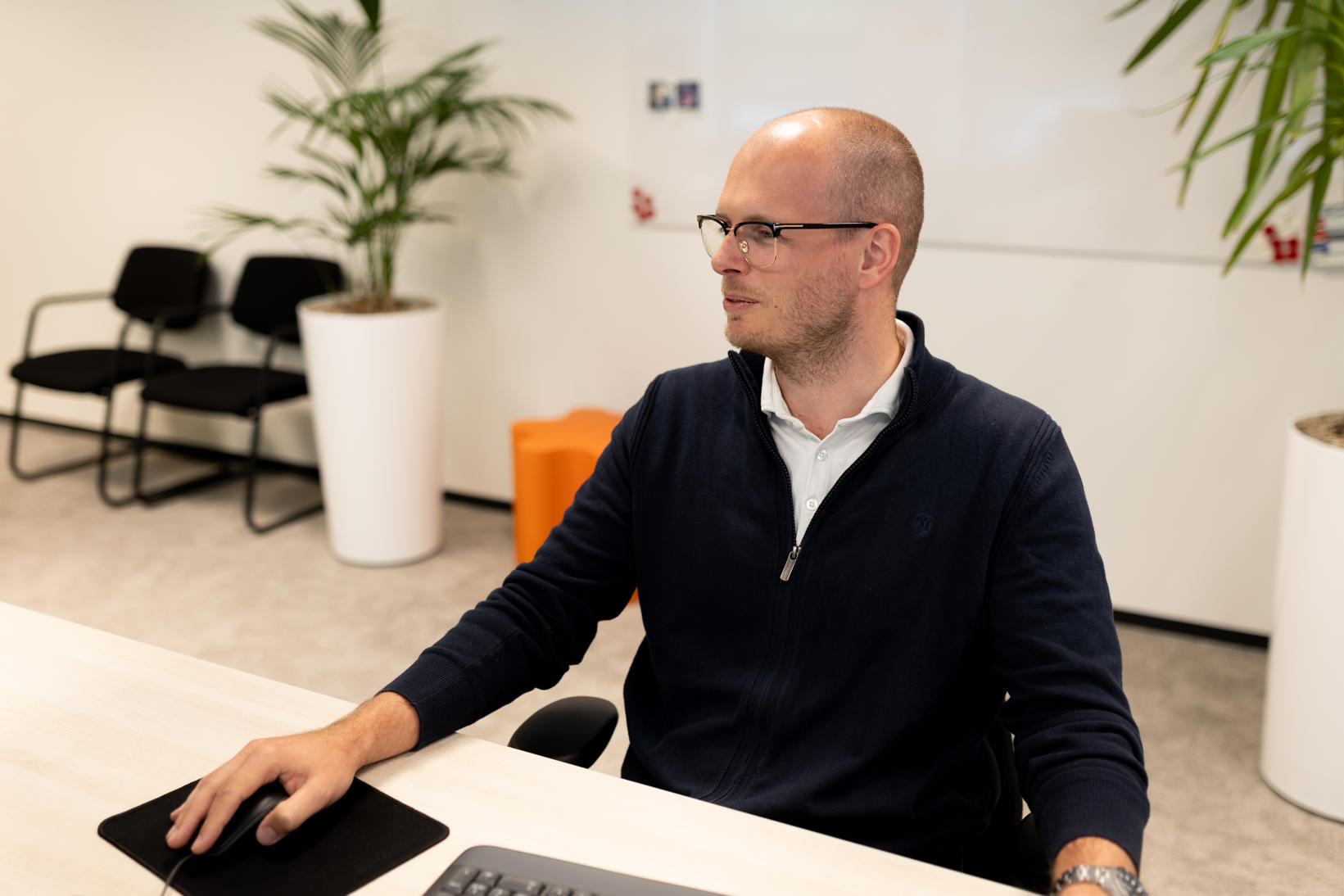
Now it's the opposite. Most of my time goes into improvement projects. One recent example: redesigning the laptop management process. That starts with talking to colleagues, figuring out what is not working as it should, and ends with changing procedures in AFAS to support the new approach. Right now I'm working on a bigger one - the change management flow for adding new software.
On top of that, we've got audits throughout the year. We hold a lot of certifications and most of them require annual audits, so there's always something coming up.
"Sqills has consistently given me opportunities to prove myself and grow into new roles."
You've been here 11 years. What keeps you at Sqills?
The ability to keep developing myself. There were definitely moments where I thought maybe it was time to look elsewhere…I think everyone has that at some point. But I like being committed to one organisation, and Sqills has consistently given me opportunities to prove myself and grow into new roles.
That's what keeps it interesting after all this time. The other thing is the people. When you've been somewhere this long, you know everyone, at least the longer-serving colleagues. That connection is real, and I'm not sure I'd be able to build that again somewhere new, especially with hybrid working making it harder to properly connect with an organisation from scratch.
"We're working with parties now that we couldn't have worked with a few years ago. We've grown, not just in size, but in responsibility."
You've been here since Sqills was much smaller. What's changed, and what hasn't?
The culture is mostly the same. What's changed is the context we operate in. The stakes are much higher now. Our customers are bigger, there are more of them, they come from more different cultures, and their requirements are growing. We're working with parties now that we couldn't have worked with a few years ago.
Back in the day it was a bit like the wild west. We could do pretty much whatever we wanted. That's shifted. When you're handling data for organisations like Eurostar or SNCF, you can't just say "don't worry about it, we will just do what we've always done." Those customers want to see certifications. They want assurance that their data is safe. And if we can't show them that proactively, they'll come and audit us themselves.
So we've grown, not just in size, but in responsibility.
"Sqills is a place where you can get far, but you have to make it happen. This isn't a company where you can coast."
What would you tell someone thinking about applying?
You should like innovation, and you should be willing to prove yourself. Sqills is a place where you can get far, but you have to make it happen. Take the opportunities, put the work in. This isn't a company where you can coast.
In the core of it: if you work hard and do your job well, that gets seen.
Want more?
Want to apply to start creating your own story at Sqills? Want to read more from other colleagues? Click below